
The Collector
August 21, 2026
New Research Supports Demands for 4th & 5th Street Safety Overhaul
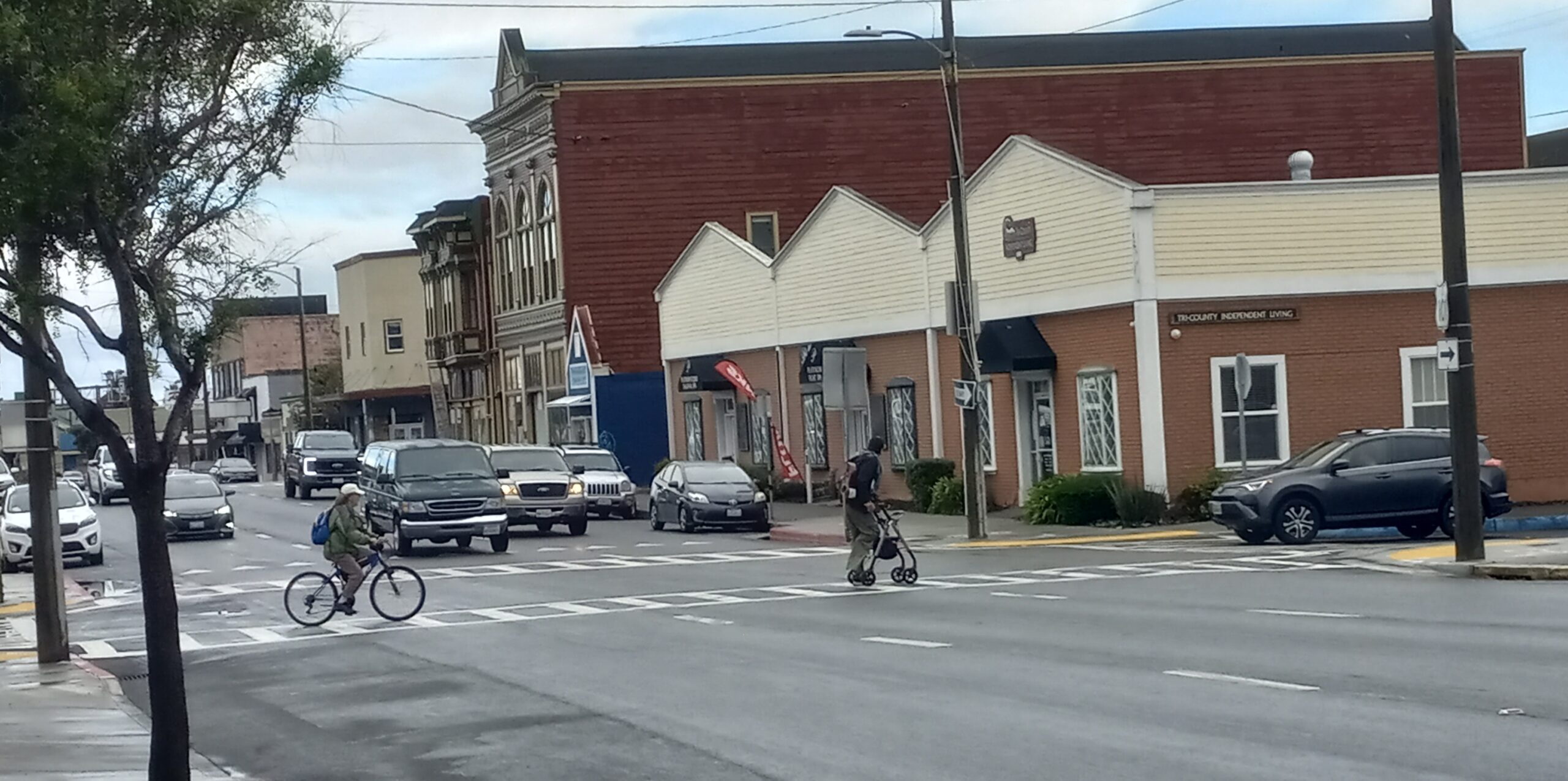
CRTP’s “Dangerous Downtown Streets” report and the 4th and 5th Street safety petition we delivered to Caltrans both propose significant, corridor-wide safety improvements. Most notably, we are advocating for the conversion of these three-lane streets into two-lane streets with a protected bike lane throughout the corridor. In contrast, Caltrans only wants to consider minor changes to specific intersections.
Our recommendations for a complete safety overhaul of 4th and 5th Streets (as well as Broadway) are based on a rigorous review of the research on what actually works to reduce traffic injuries and deaths. And evidence continues to pile up to support this approach.
A new study of pedestrian crash risk at night – when more than half of pedestrian injuries and deaths occur on 4th and 5th Streets – finds that the best way to reduce crash risk and severity is to lower vehicle speeds. The study emphasizes that even safety upgrades like improved lighting are best done at the corridor level rather than only in specific locations. It also identifies “road reallocation” – in other words, converting vehicle space into bike or pedestrian space – as a key strategy for both lowering speeds and reducing pedestrian crash exposure.
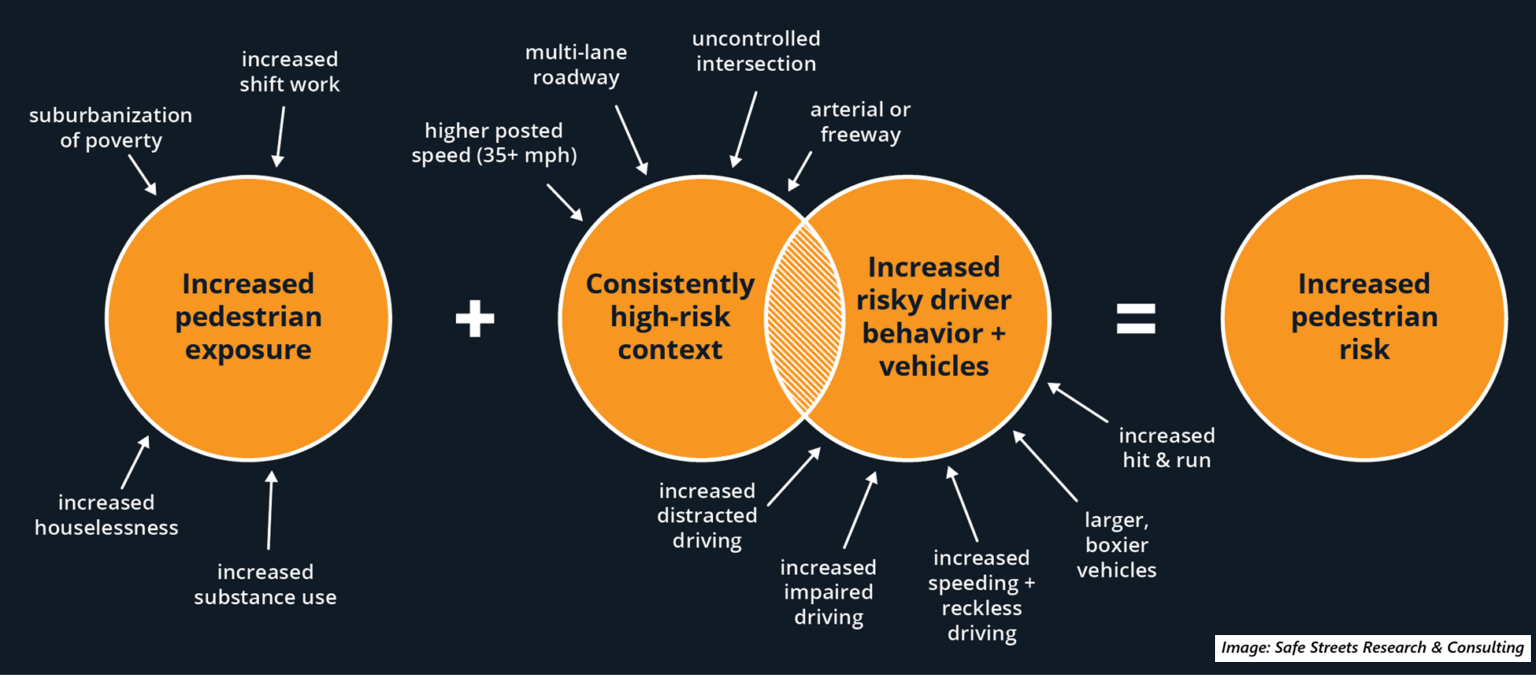
Meanwhile, another new study shows that even when safety improvements are provided at specific intersections, few pedestrians cross there if they have to walk very far out of their way to do it.
We may bemoan the risky decisions people make. But just as telling drivers not to speed doesn’t work if the road is designed to encourage it, telling pedestrians not to cross the street where they want to doesn’t work if the street design make it inconvenient to do otherwise. Both to slow drivers and to make pedestrian crossings safer, we need good design throughout the corridor, not just in specific locations.
That doesn’t mean intersection upgrades aren’t important – they are – or that they don’t make intersections safer – they do. Our report calls for plenty of intersection improvements, too. But we won’t settle for just a few tweaks here and there. Instead, we will keep fighting for the real, comprehensive solutions that will make these streets truly safe.
The Fight for Transit Funding Continues
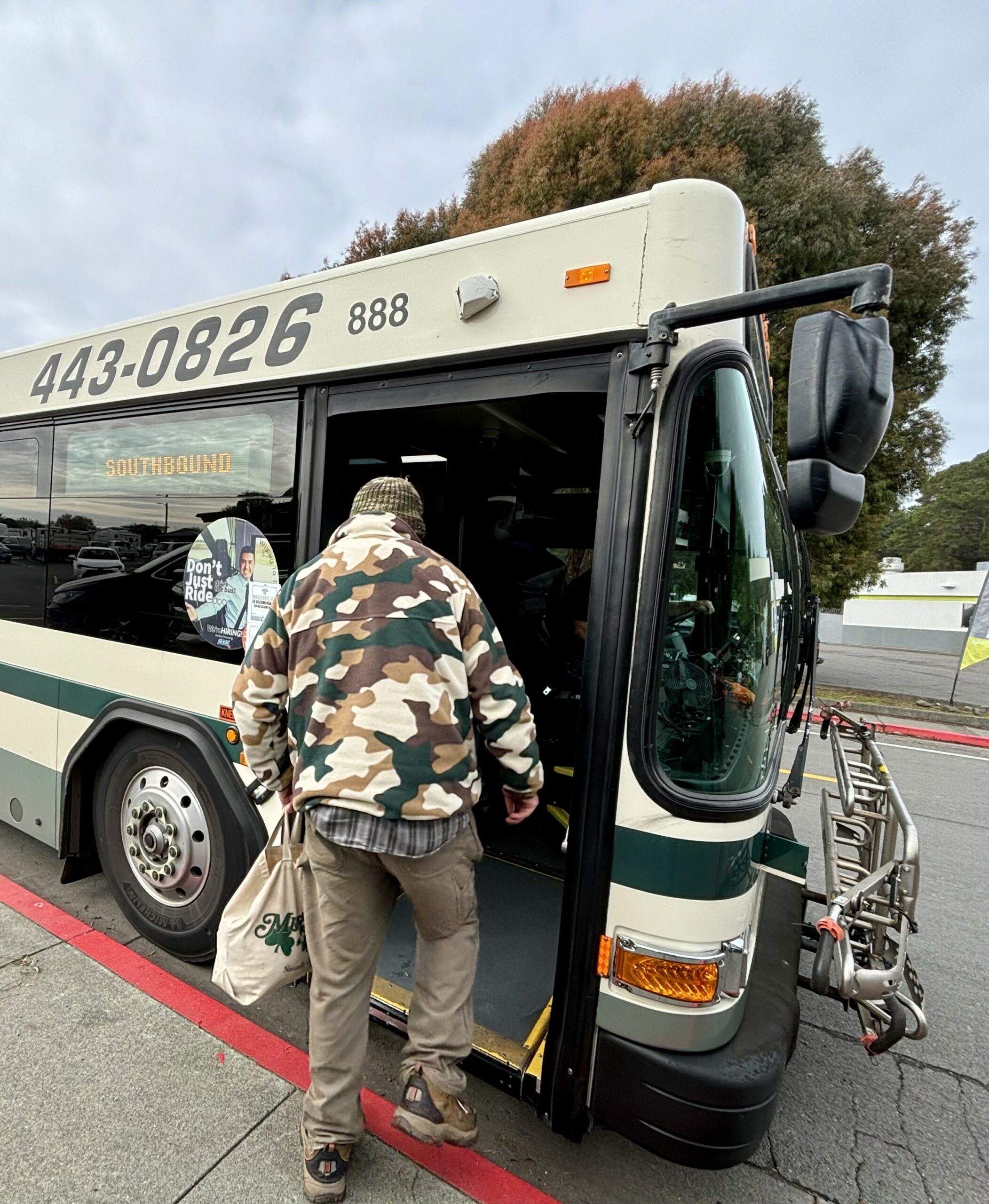
Even as we fight for Cal Poly Humboldt to continue funding evening bus service in Arcata, and for the San Joaquin Joint Powers Authority to continue providing Amtrak bus service between Humboldt and the Bay Area, the fight for even more crucial state transit funding continues.
Transit advocates are working hard to get the state legislature to overturn a California Air Resources Board decision that would effectively eliminate several major transit funding programs – programs the Humboldt Transit Authority and other local agencies have relied on in recent years. The legislature must act by the end of August to ensure the cuts don’t take effect.
Click here to send a message to state leaders demanding that transit funding be restored.
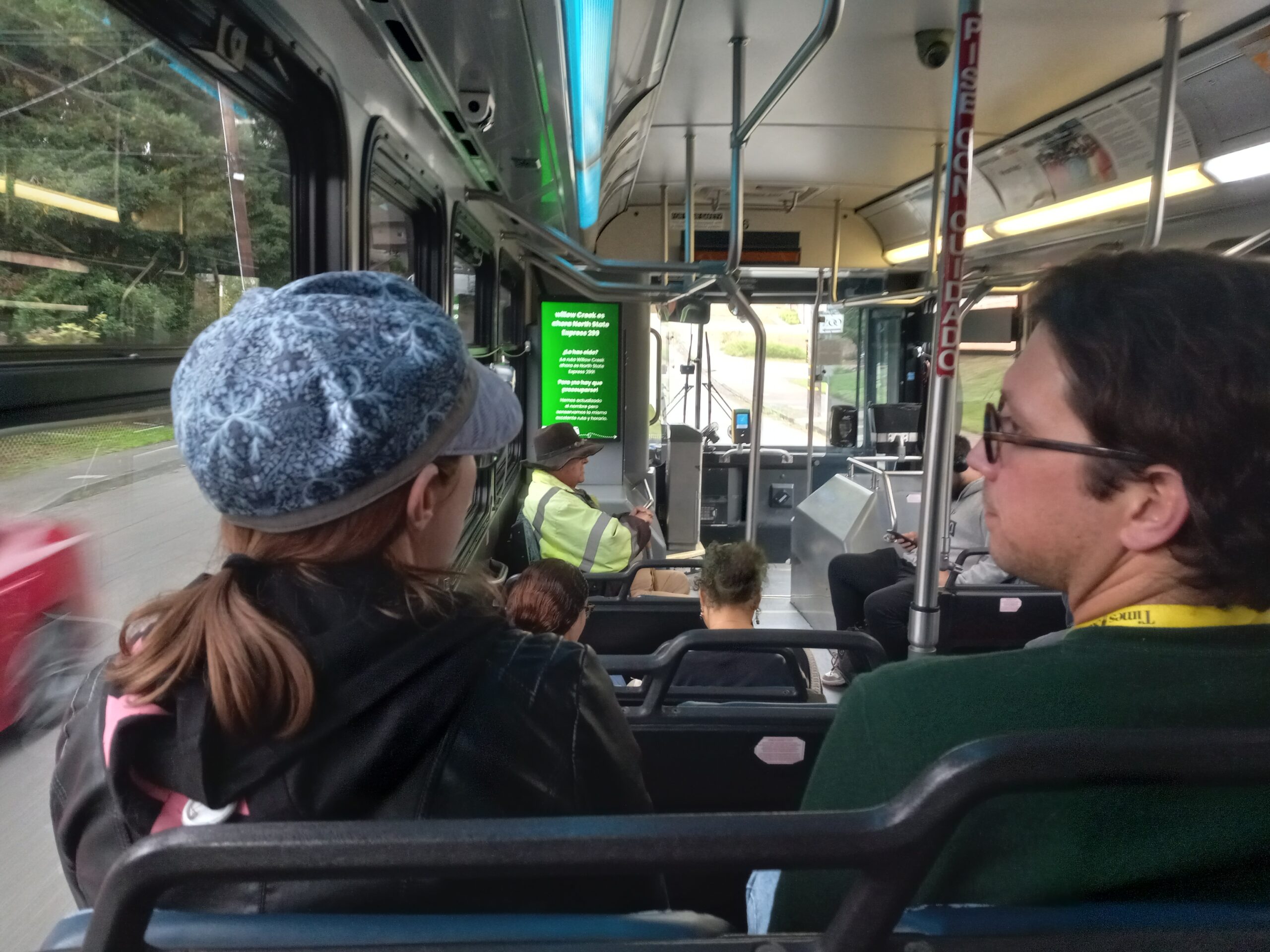
To demonstrate the importance of public transit on the North Coast and beyond, we are gearing up for an active Transit Month in September. We’re hosting a public talk on protecting transit’s role in multi-racial inclusive democracy, a meet-and-greet with Humboldt Transit Authority bus drivers, a gathering for transit riders to organize for more transit investment and better service, and ride-alongs with regular bus riders and local decision-makers. Plus, there’s a fun ride contest where you can earn badges and the chance to win prizes by logging your bus rides in September.
Click here for more information about all our Transit Month events and activities.
Give Input on County and Arcata Housing Plans
Local governments are currently updating their state-mandated Housing Elements to demonstrate how and where they plan to add more needed housing over the next eight years. Next week, Humboldt County will be hosting workshops in Garberville and McKinleyville to get public input on their plans. Meanwhile, Arcata representatives will be at the upcoming Friday Night Markets asking for input on their plans.
CRTP is advocating for all local governments to focus on walkable, bikeable, transit-oriented development, to ensure that new housing is affordable, equitable, and climate-friendly. This is especially important for Humboldt County, since only a few areas within its jurisdiction – most notably McKinleyville and Myrtletown – can really meet these standards.
New research shows that local housing plans throughout the state are failing to direct new homes to the most walkable areas. We intend to make sure that doesn’t happen here. You can join us at one of the upcoming workshops and tell the county to ensure that new homes help us reach climate and livability goals and don’t create new sprawl.
News from Beyond the North Coast
It’s Crunch Time In Sacramento
With only a week to go in the legislative session, several important transportation bills are heading for final votes, while even more have died before getting to this point.
Bills still alive include AB 1976, which would make it harder for opponents to block bike safety projects and easier for residents to request traffic calming measures, and SB 1167, which would clarify the differences between e-bikes and e-motos and require clear labeling.
Bills that have died include several overly restrictive e-bike measures that we’re glad to see gone. But they also include important proposals like AB 2276, which would have required speed-limiting devices in the vehicles of chronic, extreme speeders, and SB 569, which would have made it harder to remove safe bike infrastructure.
Less Driving Means Safer Roads
A new study finds that the amount of driving done in a state is strongly correlated with the number of people who die in traffic crashes – and that when vehicle miles traveled decrease, so do crashes. This might seem obvious, and it is. But the most common way that states measure safety is by the number of fatalities per vehicle mile traveled, which excuses higher death rates when people drive more. If we care about reducing the actual number of traffic deaths, reducing the number of miles people drive is likely one of the most effective strategies.
The Collector is CRTP’s weekly transportation news roundup, published every Friday. We focus on North Coast news, but we also include relevant state, national and international transportation news – plus other items that we just find kind of interesting! To submit items for consideration, email colin@transportationpriorities.org.