
The Collector
July 3, 2026
Eureka Can’t Enforce Its Way to Safer Streets
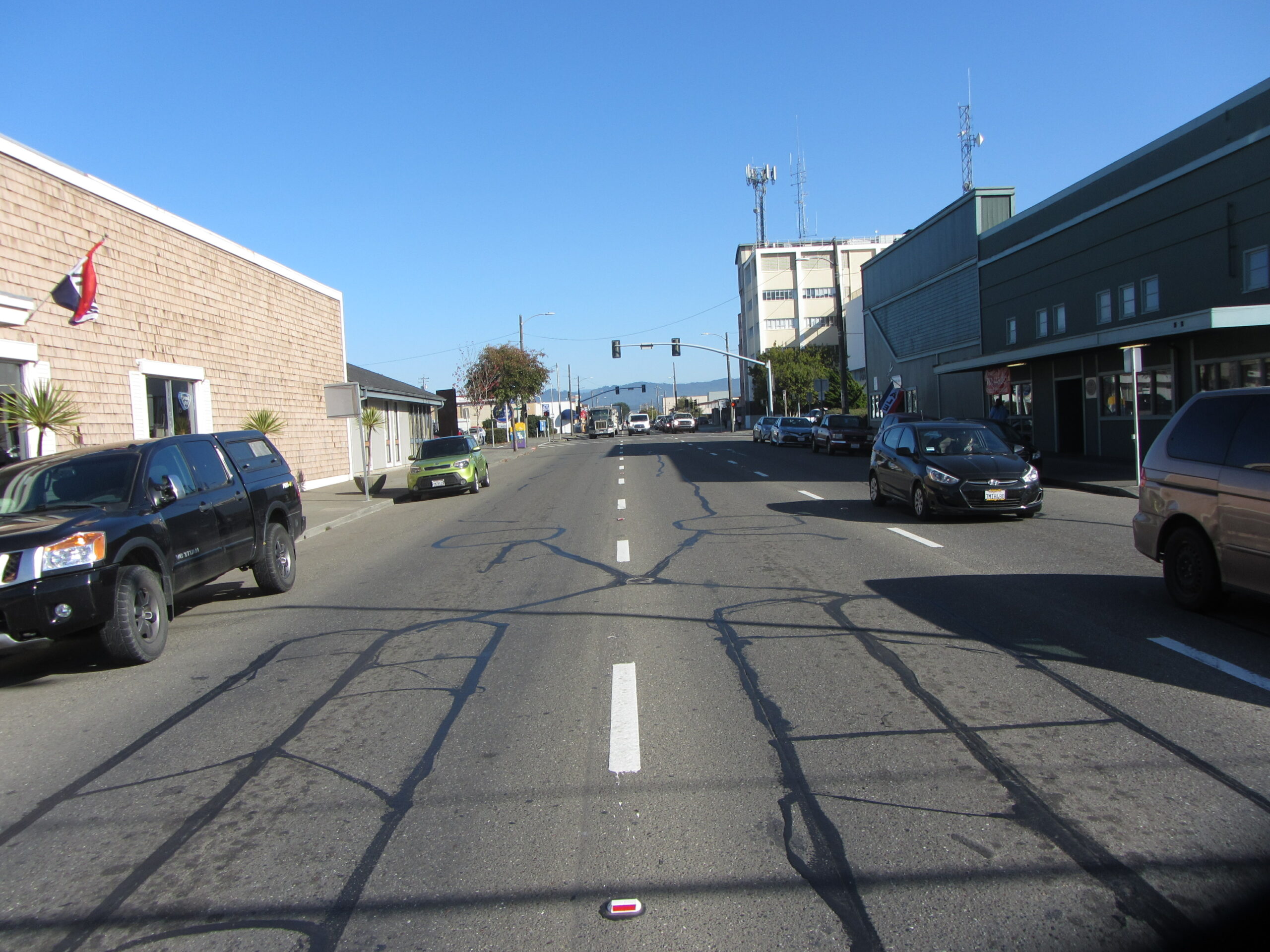
The Eureka Police Department has announced a new campaign to reduce crashes through a combination of traffic enforcement and trying to change “everyday driving behavior.” We applaud EPD’s focus on the traffic safety crisis, which is responsible for more deaths and injuries than violent crime. But we also know from a large body of research that enforcement and education are not going to make our streets safer in the long term. EPD’s own data show that, despite a dramatic increase in traffic stops in the last two years, crashes have actually increased.
A recent report from the national safety organization Vision Zero Network summarizes the reasons not to rely on enforcement. First, safety gains from enforcement are not sustainable. Second, enforcement results in inequitable impacts on marginalized communities. To the extent enforcement is used as a safety tool, it should focus exclusively on high-risk activities like speeding, aggressive driving, and DUI.
EPD is also asking residents to fill out a survey about what they think is causing crashes, and what they think should be done to make things safer. But there is no shortage of crowdsourced data on local street safety – see for example the hundreds of local reports on Street Story – and the solutions are not really a matter of opinion, but a matter of evidence. Our main message to Eureka is that the most effective and sustainable solution to the safety crisis is to redesign the city’s streets to calm traffic and provide protected bicycle and pedestrian facilities. We encourage CRTP’s supporters to fill out the survey and convey that message to EPD.
Do You Ride the Amtrak Bus? We Want to Hear from You!
We’ve received word that San Joaquin Joint Powers Authority – the agency that runs the Amtrak connecting bus between Arcata and the San Francisco Bay Area – is facing financial difficulties and considering cutting or scaling back the service. This is the last remaining long-distance bus serving Humboldt County, and we know a lot of people rely on it. If you use the Amtrak bus, email colin@transportationpriorities.org by next Wednesday with a few sentences about how important it is to you. We’ll collect the stories and pass them on to the folks at the SJJPA to encourage them to keep operating the service.
Give Eureka Your Opinions About Housing
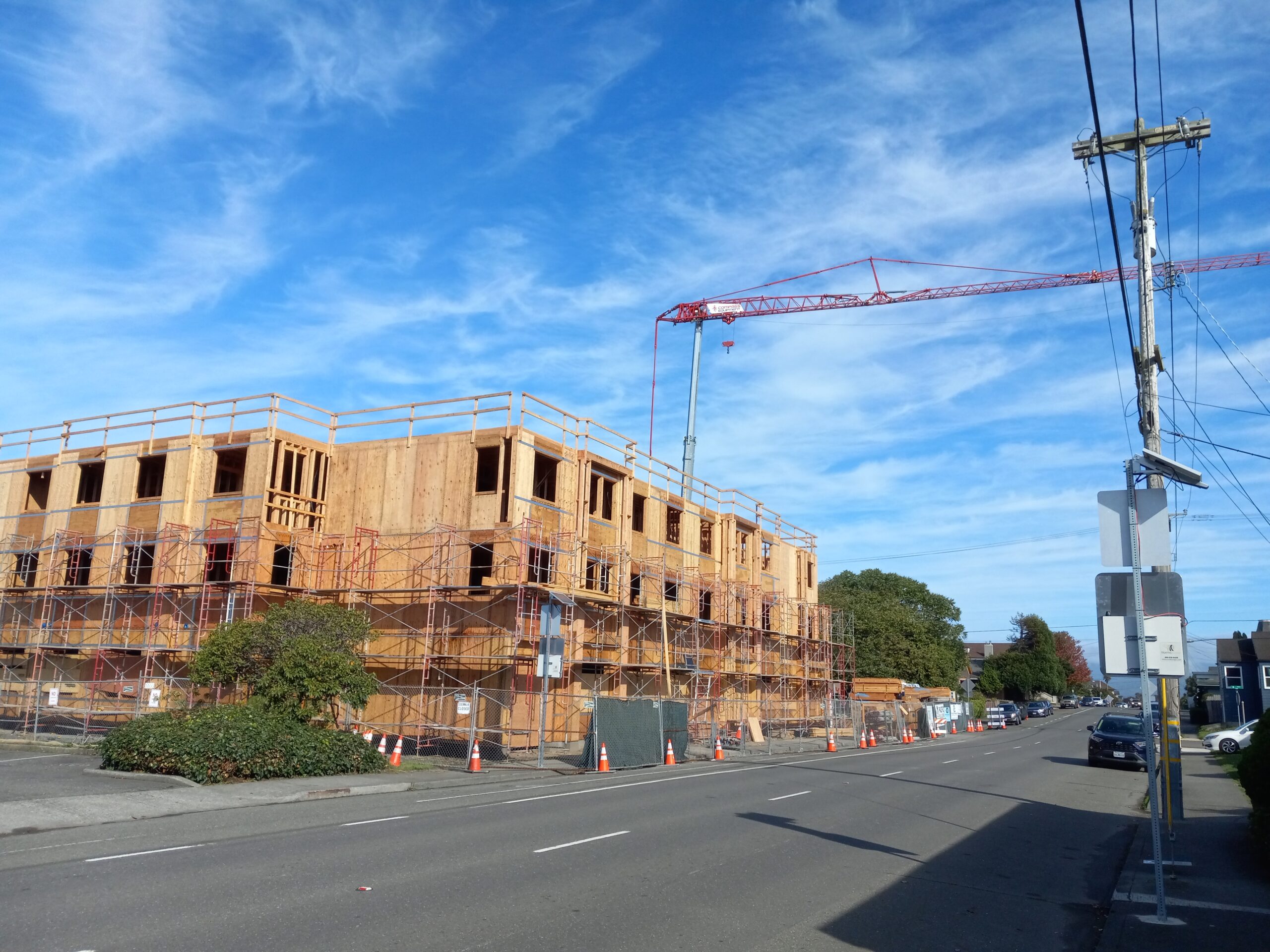
Eureka is currently updating its state-mandated Housing Element, a document demonstrating how and where the city plans to add needed housing. We encourage people who live or work in Eureka to fill out the survey. We are asking the city to continue its focus on walkable, bikeable, transit-oriented development, to ensure that new housing is affordable, equitable, and climate-friendly.
Meanwhile, the county is in the process of updating the Humboldt Bay Area Plan, which will direct future housing and other development in areas around Humboldt Bay outside of city limits. CRTP recently submitted a comment letter with our allies at Humboldt Waterkeeper and EPIC. We are asking the county to ensure that new development is consistent with the targets and policies in the Regional Climate Action Plan and Regional Transportation Plan, that sensitive habitats are protected, and that sensible policies for port development are included. The Humboldt County Planning Commission will consider the plan on July 16th, and public comments can be made before or at the meeting.
Changes Coming to the Arcata-Eureka Corridor
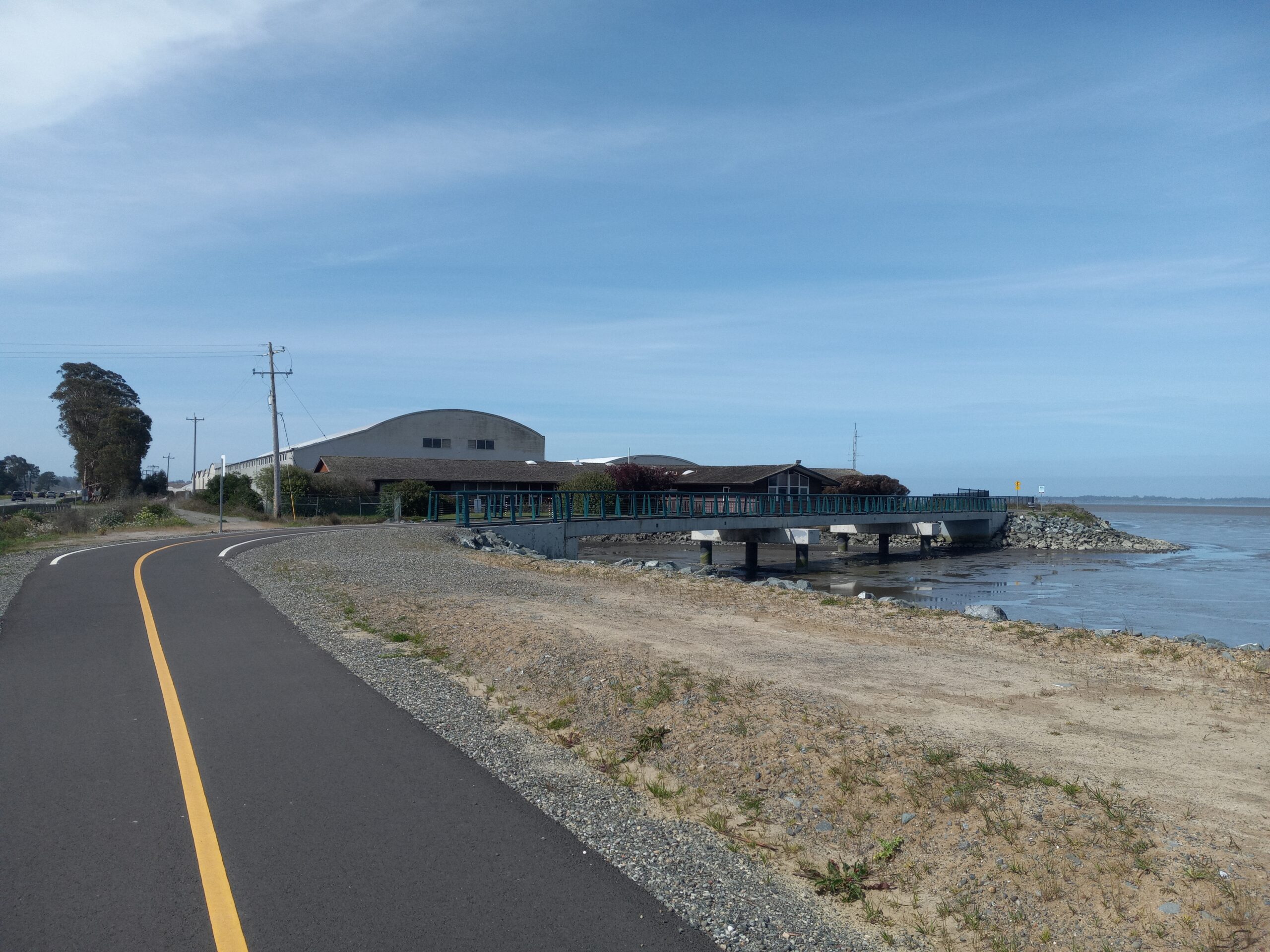
Caltrans is finally nearing completion of its safety project in the US-101 Arcata-Eureka corridor. While the Indianola interchange has been the most dramatic part of the project, equally important for safety (and much less expensive) are the changes coming in the next month, which include adding a traffic signal at Airport Road and closing all remaining median openings in the corridor.
At the same time, Caltrans crews are conducting emergency inspections of the southbound Eureka Slough bridge. The inspections have already caused the closure of the Waterfront Trail underneath the bridge and could determine a need for near-term construction of a new bridge. The Eureka Slough bridges were already slated for replacement, but not for several more years.
We also can’t forget the bigger picture: all of this is taking place in a corridor that is extremely vulnerable to the effects of sea level rise. Click here to read comments from CRTP, EPIC, and Humboldt Waterkeeper on Caltrans’ sea level rise adaptation plan for the corridor.
Help Plan for Safer Roads in Hiouchi
If you live in Del Norte County, take note: there will be a community meeting on July 15th at 6 pm at the Hiouchi Community Fellowship to gather public input on the development of a Hiouchi Community Transportation Plan. The plan is part of the broader Del Norte Local Transportation Commission Carbon Reduction Plan. Click here for more information and to provide input online.
Regional Roundup of Coming Bike and Pedestrian Improvements
The Great Redwood Trail Agency has allocated millions of dollars for planning and/or construction of trail segments in Fortuna, Loleta, Alderpoint, the Eel River Canyon, and from Eureka to College of the Redwoods. In Cutten, Humboldt County supervisors recently approved repaving plans for Cedar and Redwood Streets that include new bike lanes and speed humps. CRTP and our allies are also asking the county to narrow lanes and widen shoulders when they repave southern Central Avenue in McKinleyville, a dangerous stretch with fast-moving traffic and no sidewalks or bike lanes.
Got Opinions About Development and the Economy in McKinleyville?
A team at Cal Poly Humboldt, in collaboration with other local partners, has produced a draft McKinleyville Economic Strategic Study, and they are accepting public comment through July 15th. We hope the community builds on the principles of McKinleyville Town Center plans and develops into a more vibrant, walkable, transit-friendly place.
News from Beyond the North Coast
Bigger Trucks and SUVs Are Killing a Lot of People
The New York Times has published a striking analysis of the safety impacts of the increase in size of pick-ups and SUVs over the last 20 years. They found that bigger vehicles have resulted in at least 200-400 additional pedestrian deaths every year. Meanwhile, the Guardian reports that the same trend in Europe is projected to result in 400 additional deaths every year by 2040.
Aligning Speed Limits for Cars and E-Bikes
Responding to the rise in concern about e-bike safety, a new analysis compares the kinetic energy – the best predictor of the severity of a crash – of an e-bike to the energy of a full-size SUV. The result: an e-bike going 15 mph has the same kinetic energy of an SUV going 3.5 mph. For safety’s sake, perhaps we should set speed limits for cars and SUVs to match those of e-bikes.
Tell Congress to Oppose the New Transportation Bill
The “Build America 250 Act” reduces transit and safety funding and increases highway spending. It’s bad for communities, bad for the climate, and bad for the economy. Tell Congress not to approve it.
The Collector is CRTP’s weekly transportation news roundup, published every Friday. We focus on North Coast news, but we also include relevant state, national and international transportation news – plus other items that we just find kind of interesting! To submit items for consideration, email colin@transportationpriorities.org.