
The Collector
July 24, 2026
Crash Prevention Through Street Design
The Eureka Police Department’s ongoing “Together, We Drive Change in Eureka” campaign highlights the issue of Eureka’s high crash rates and solicits public input on how to improve safety. We applaud EPD for putting a spotlight on the epidemic of deadly traffic crashes and for publishing a wealth of recent data on crashes in the city. However, a focus on enforcement and personal responsibility is not likely to lead to sustainable safety gains.
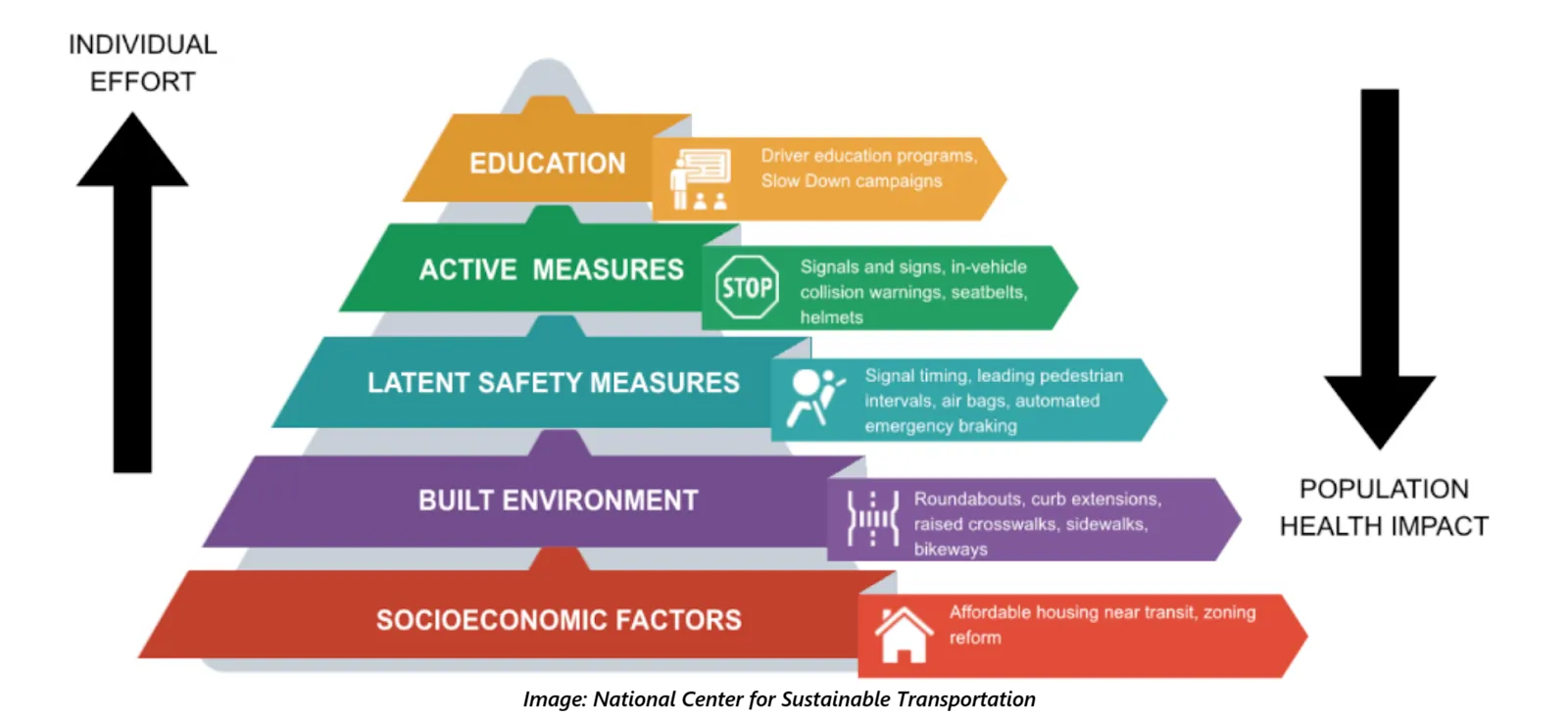
Traffic safety experts know that education and enforcement campaigns are the least effective safety interventions, while changing the built environment is highly effective. This concept is helpfully visualized in the Safe System Pyramid.
In the same way that police departments often promote Crime Prevention Through Environmental Design, we hope EPD will champion Crash Prevention Through Street Design. Because the most effective, research-backed, data-driven strategies Eureka can use to make its streets safe are things like lane narrowing, speed humps, protected bike lanes, and better crosswalks.
Changing the Way We Think About Crashes
The way we think and talk about traffic safety is really important. With Eureka police newly focused on crashes, this is an area where EPD and other local law enforcement agencies have room for improvement.
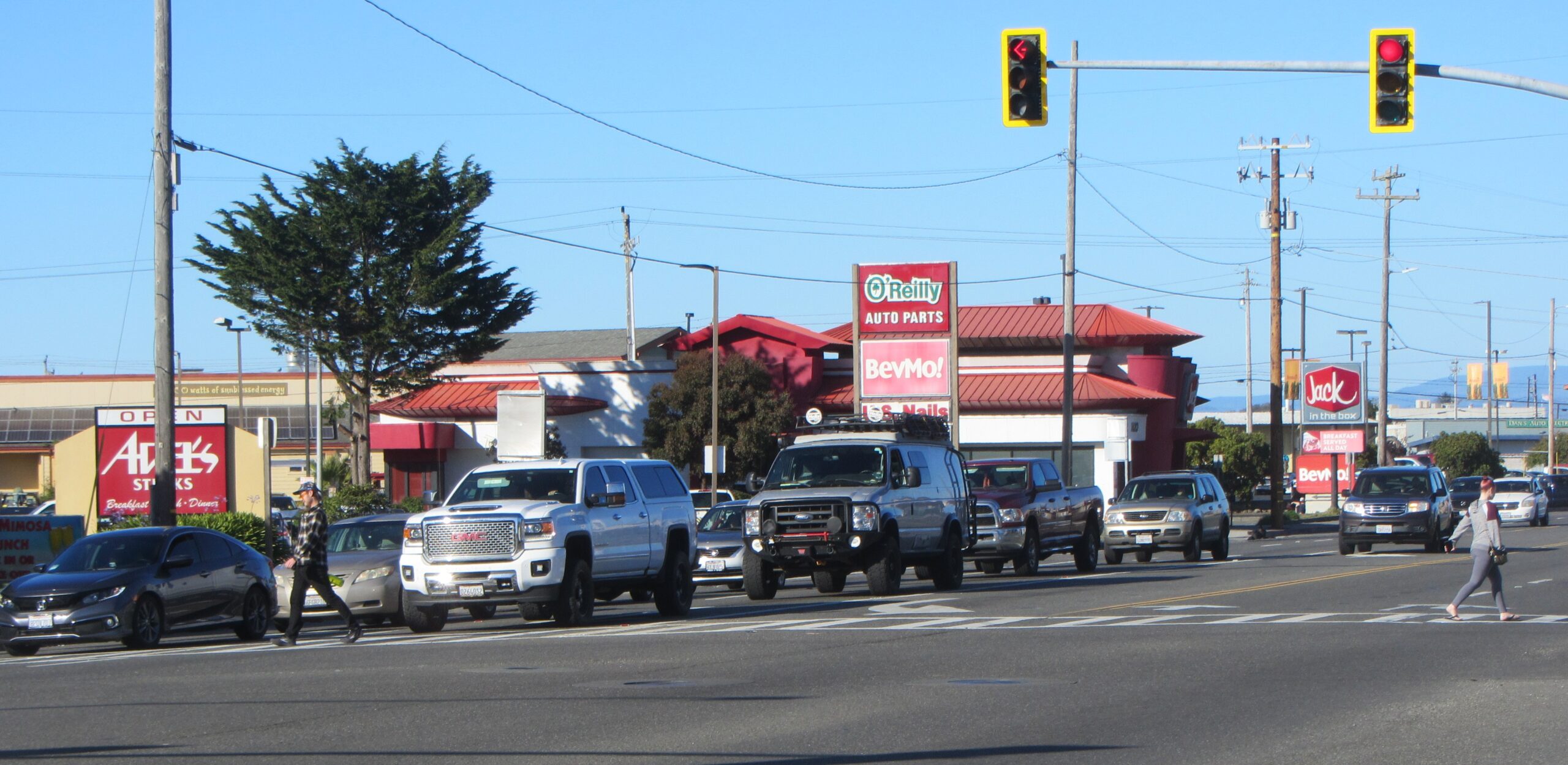
A major injury crash this week provides an example. EPD’s press release, republished by multiple local news outlets, implies that the victim’s personal behavior is to blame for the crash and ignores the infrastructure, history, and context.
Here’s a summary of what the EPD press release said about the crash:
- A pedestrian got in an altercation with another person on Fairfield Street and called the police.
- He said he was going to “enter the roadway” (presumably to cross Broadway) and did so, despite the dispatcher advising against it.
- He crossed the street just south of Wabash, where the lights were green for Broadway traffic.
- A driver hit him in the southbound right-hand lane of Broadway.
- The driver was not intoxicated, but the pedestrian might have been.
Here are some issues the press release did not address:
- This location is known to be hazardous. Dozens of pedestrians and bicyclists have been injured or killed on Broadway in the last decade. At this same intersection, another pedestrian was seriously injured in 2019 and a bicyclist was killed in 2020. There are numerous hazard, near miss, and crash reports for the location on Street Story.
- To cross Broadway using only marked crosswalks at this location means using four separate crossings and waiting, sometimes for extended periods, to get a walk signal at three of those crossings. California’s Freedom to Walk Act decriminalized crossing the street outside a crosswalk in 2023.
- The victim in this crash had already crossed five lanes of traffic when he was hit in the sixth and last lane he had to cross. Why did the driver not see a person walking in the street who had already made it most of the way across?
- Why did the victim try to cross the street? Under the reported circumstances – he was on the phone with the police during an altercation – it seems likely he was trying to deescalate the situation or get away from the other party.
- Intoxication is not illegal for a pedestrian. Should it matter whether the victim was intoxicated?
In press releases like these, EPD’s focus on personal behaviors, failure to provide context, and implied victim blaming all perpetuate the kind of thinking that got us into this traffic safety crisis and fail to promote evidence-based solutions. To change the community’s attitudes toward traffic safety, EPD must also change its own.
Take CRTP’s Bus Rider Survey!
We want to hear from local bus riders about experiences using the local transit system and priorities for improvement. Let us know what you think, and join the local transit improvement movement!
Amazon Comments Due Next Wednesday
Humboldt County is currently accepting input on what types of impacts should be considered during its environmental review of the proposed Amazon distribution center in McKinleyville. CRTP, Humboldt Waterkeeper, and EPIC submitted our comments this week. If you have opinions about which potential environmental impacts should be reviewed, submit your comments now!
What Do You Think of Those New Safety Improvements?
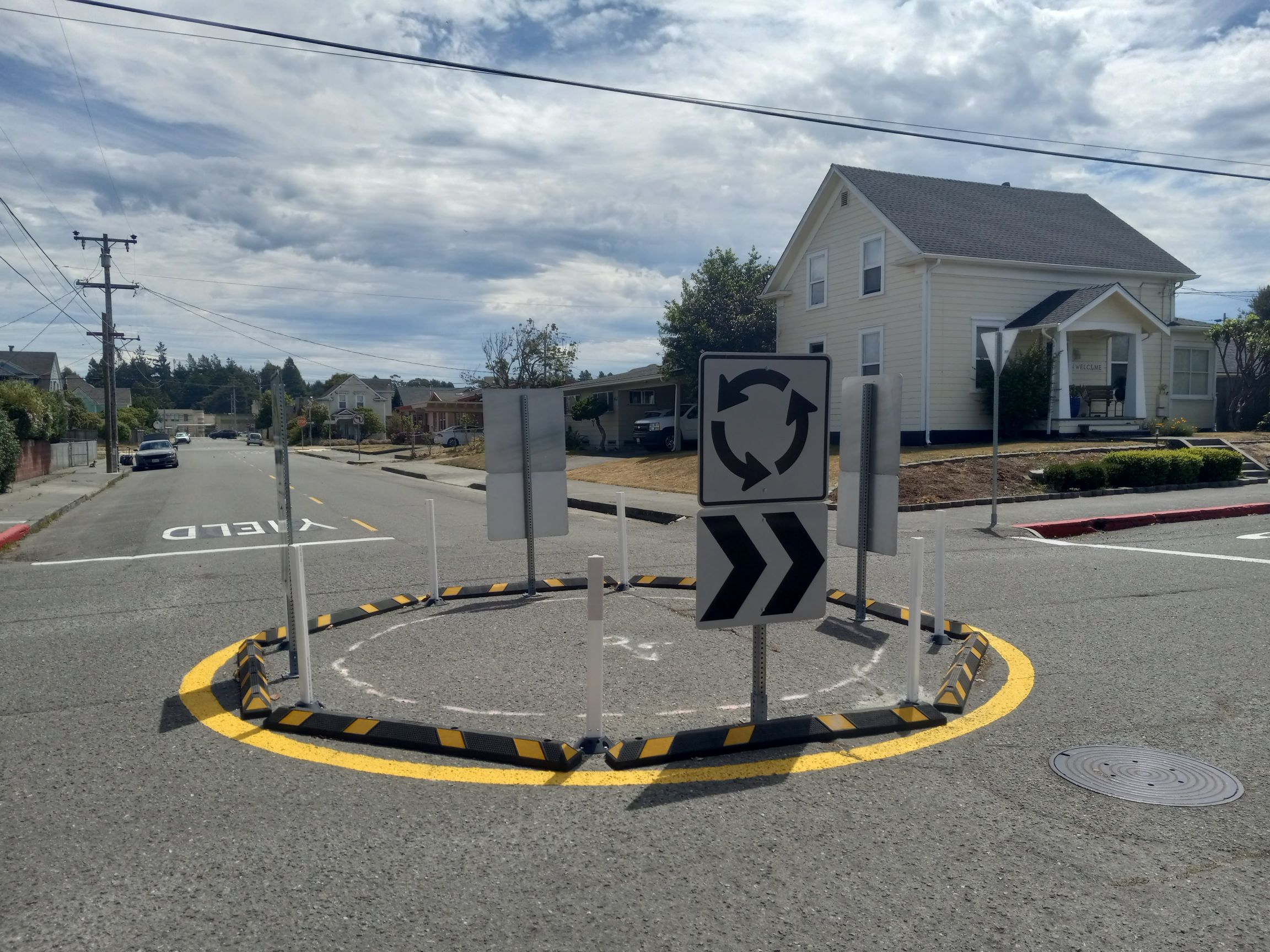
The Humboldt County Association of Governments is helping Eureka, Arcata, Fortuna, and Ferndale install quick-build traffic safety improvements as part of its regional Vision Zero Action Plan development. We’re particularly excited about the speed humps on Arcata’s 11th Street and K Street. If you’ve seen any of these new safety improvements, let HCAOG know what you think about them.
News from Beyond the North Coast
Trump Administration Supports Dangerous Streets
The US was the only country to vote against a United Nations resolution on road safety this week. The Trump administration’s representative justified the vote by claiming that the UN’s goal to reduce road deaths was part of a hidden agenda to (gasp) reduce climate pollution and promote active transportation.
The “Idaho Stop” Is Now the “Palmetto Stop”
Idaho was the first state to legalize the rolling stop for bicyclists decades ago, and South Carolina is the latest. It’s not exactly a radical idea. When will California get around to legalizing this safe, common-sense procedure that most bicyclists already do routinely?
Complete Streets Are Better for Business
A new report from Smart Growth America adds to the evidence that safe bike and pedestrian infrastructure helps spur local economic growth.
The Collector is CRTP’s weekly transportation news roundup, published every Friday. We focus on North Coast news, but we also include relevant state, national and international transportation news – plus other items that we just find kind of interesting! To submit items for consideration, email colin@transportationpriorities.org.